DESIGNED TO BE DIFFERENT
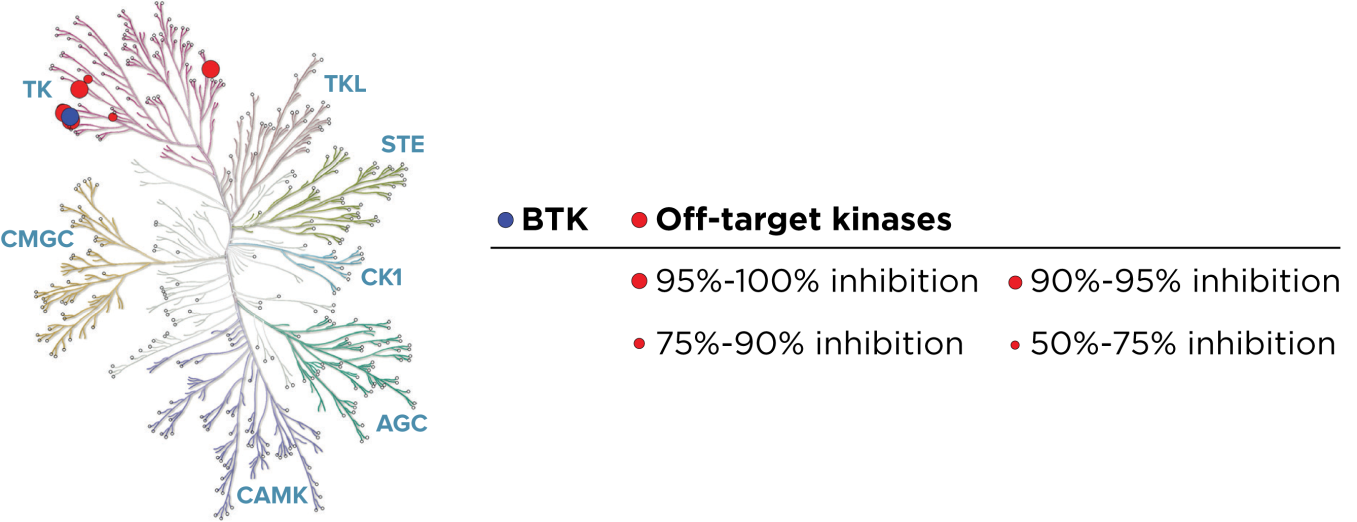
by minimising off-target effects in the treatment of B-cell malignancies3–6
The development of BRUKINSA began in 2012 as a collaboration between the medical, biochemistry, discovery biology, and in vivo pharmacology departments at BeiGene (now BeOne Medicines). The team screened more than 3,000 compounds to find the molecule with the highest therapeutic potential: BGB-3111 (the 3,111th compound screened), later named zanubrutinib.2
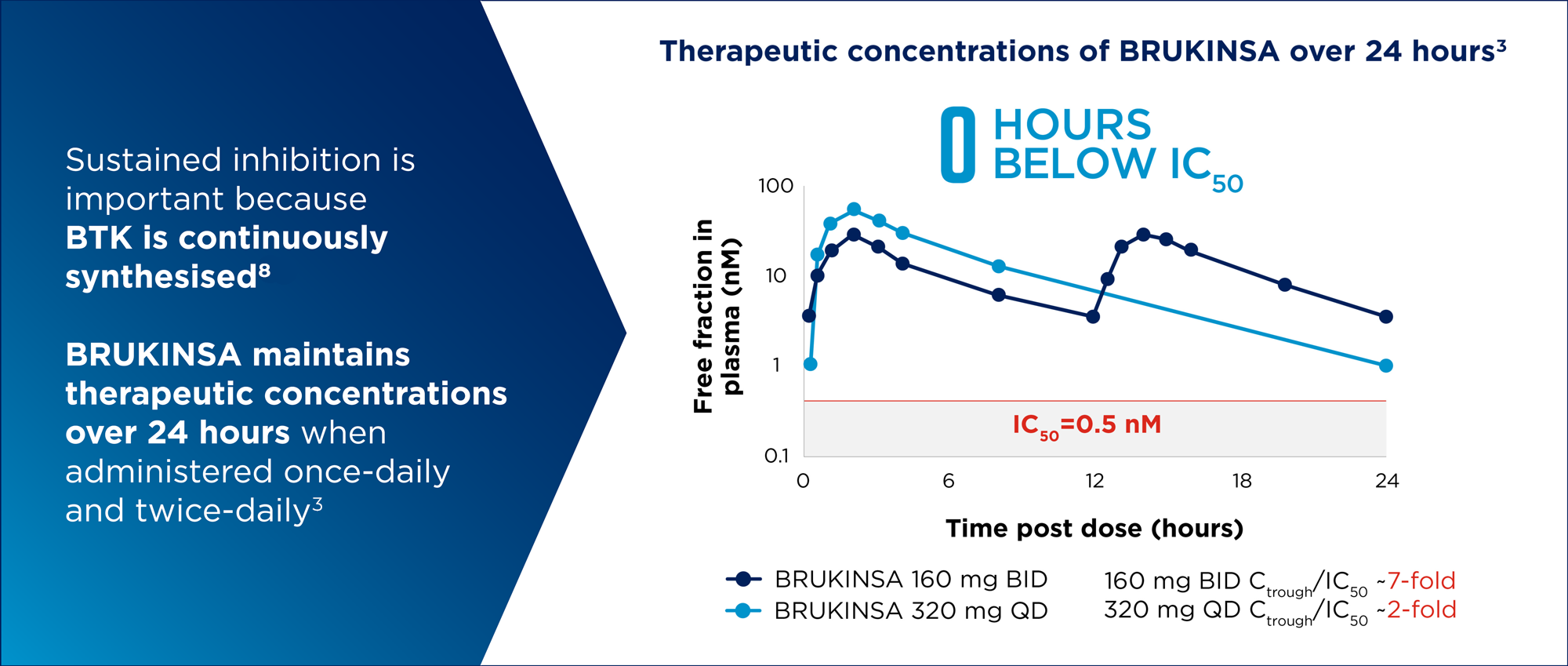
Like other covalent BTK inhibitors, BRUKINSA is a small molecule that binds irreversibly to cysteine 481 in the ATP binding pocket of BTK. However, its molecular structure offers a distinct pharmacokinetic profile.2,3,5,7