

- No restrictions for co-administration with PPIs or H2RAs1
- No dose modification for patients aged ≥65 years, or with mild-to-moderate impairment of kidney function or liver function1
- For 3 to 7 days pre- and post-surgery, consider the benefit-risk of withholding BRUKINSA depending upon the type of surgery and the risk of bleeding1
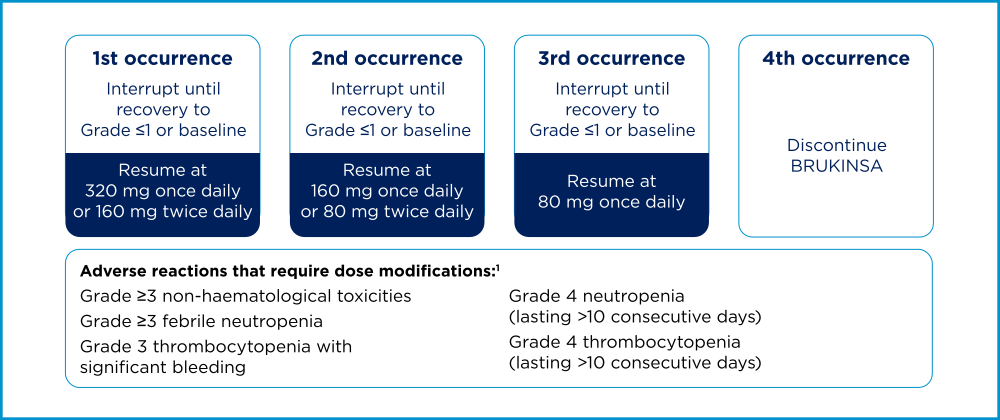
- Dose reductions can be achieved by splitting the tablet in half along the score line1
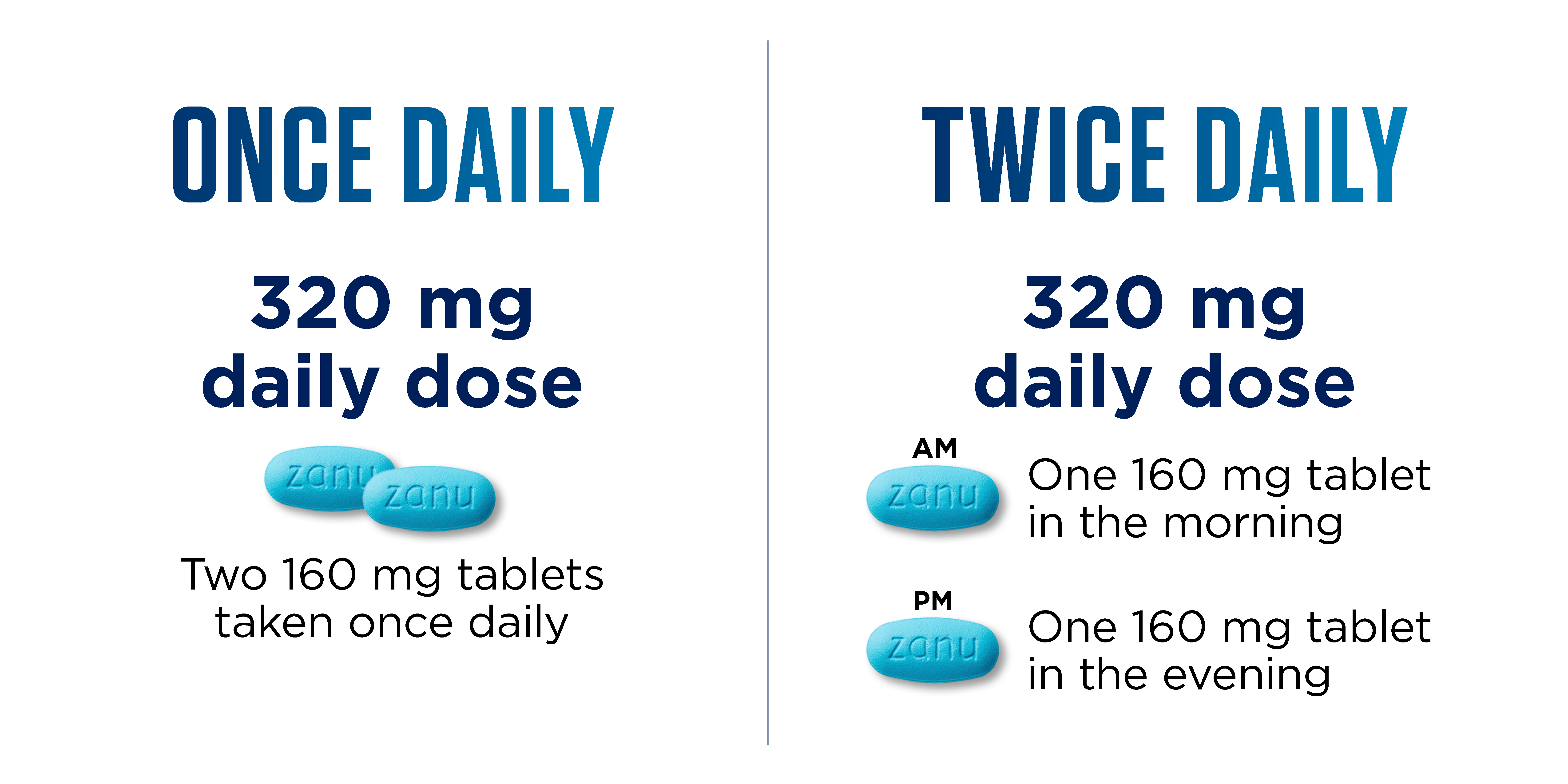
- The recommended daily dose of BRUKINSA is 320 mg; dose modifications should only be considered when clinically indicated per the label1
Special populations1
| Population | Dose adjustment |
|---|---|
| Elderly (≥65 years) | None |
|
Renal impairment*
Mild to moderate
Severe/dialysis |
None
|
|
Hepatic impairment† Mild (Child-Pugh class A) Moderate (Child-Pugh class B) Severe (Child-Pugh class C) |
None None 80 mg twice daily (one half-tablet AM, one half-tablet PM)‡ |
- *Estimated by Cockcroft–Gault.1
- †Based on Child–Pugh score.1
- ‡The safety of BRUKINSA has not been evaluated in patients with severe hepatic impairment. Monitor these patients closely for adverse events of BRUKINSA.1
CYP3A inhibitors or inducers1
| Co-administration with CYP3A inhibitors | Co-administration with CYP3A inducers |
|---|---|
|
Mild inhibitors: Monitor patients closely for toxicity and follow dose modification guidance as needed |
Mild inducers: May be used with caution |
|
Moderate inhibitors: 160 mg once daily or 80 mg twice daily |
Moderate inducers: Avoid concomitant use |
|
Strong inhibitors: 80 mg once daily |
Strong inducers: Avoid concomitant use |
Recommended dose modification for Grade ≥3 adverse reactions1